
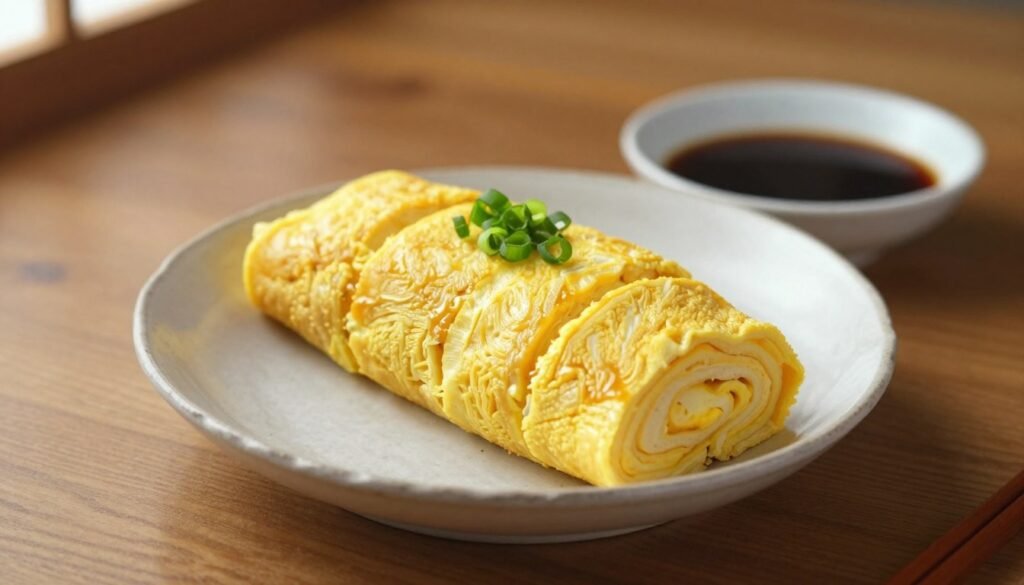
The first Japanese rolled omelette I made tore because I rushed the pan. I kept cooking, and the tender, warm egg tasted better than it looked. That small success made homemade tamagoyaki part of my regular cooking routine.

This easy egg recipe uses seasoned eggs cooked in thin sheets. I roll each sheet over the last, building a neat, compact omelette with a soft, lightly layered center.
Tamagoyaki is common in a traditional Japanese breakfast, but I also enjoy it in lunch boxes and with sushi rice. It may be sweet, savory, warm, room temperature, or chilled. These choices make it easy to serve as a flexible meal.
With a few basic ingredients and gentle heat, I can make a special omelette without difficulty. The method takes practice, but each roll becomes easier.
– tamagoyaki recipe, Japanese omelette, sushi omelette
My tamagoyaki recipe makes a tender, lightly sweet egg roll with neat layers. It uses four large eggs, mirin, soy sauce, sugar, and dashi or water. Serve it for breakfast, in bento boxes, or over a simple rice bowl.
For this Japanese omelette recipe, I whisk the eggs until the whites and yolks blend. I heat a lightly oiled nonstick pan over medium-low heat, then pour in a thin layer. When it is mostly set, I roll it toward me.
I slide the roll to the far side, oil the open space, and add more egg beneath it. Each new layer wraps around the last one. This rolled egg recipe needs gentle heat, which keeps the surface soft instead of deeply brown.
After the final roll, I let the omelette rest for several minutes before slicing. For a sushi omelette recipe, I cut neat pieces and place them over seasoned rice. The mild sweetness pairs well with rice, soy sauce, and pickled ginger.
| Ingredient | Amount | Purpose |
|---|---|---|
| Large eggs | 4 | Create the soft, layered base |
| Mirin | 1 tablespoon | Adds gentle sweetness and shine |
| Soy sauce | 1 teaspoon | Brings salty, savory depth |
| Sugar | 1 teaspoon | Balances the savory seasonings |
| Dashi or water | 1 tablespoon | Keeps the egg mixture moist and light |
My Easy Tamagoyaki Recipe Ingredients
I keep my tamagoyaki ingredients simple and measure them carefully. A balanced egg mixture creates thin, tender layers that roll without breaking.
Eggs, Sugar, Soy Sauce, and Mirin
I use large eggs for steady texture and even layers. Sugar adds gentle sweetness and helps the outside turn lightly golden.
A small splash of soy sauce brings salt and umami. I add it carefully because too much can darken the omelette. Mirin adds moisture and mild sweetness, making it essential Japanese egg seasoning.
How Dashi Adds Classic Japanese Omelette Flavor
Dashi gives the eggs a savory, rounded taste. This light stock often includes kombu and katsuobushi, or dried bonito flakes.
I use only a little dashi because extra liquid can make rolling harder. A dashi omelette has a soft, delicate flavor that suits rice, sushi, or a bento lunch.
Ingredient Substitutions I Use in American Kitchens
When dashi is unavailable, I use water or a little low-sodium chicken broth. Both keep the egg mixture moist without adding too much salt.
My easy mirin substitute combines rice vinegar and sugar. I start with a small amount, then adjust the sweetness to suit my taste.
- For dashi: water or low-sodium chicken broth
- For mirin: rice vinegar with a pinch of sugar
- For a lighter taste: reduce the soy sauce slightly
How I Make Japanese Rolled Omelette Step by Step
Learning how to make tamagoyaki is easier when I work in thin layers and keep the heat calm. I use a gentle hand, light oil, and patience to build a tender Japanese egg roll with clean slices.
Whisking the Tamagoyaki Egg Mixture
I crack 4 eggs into a bowl with 1 tablespoon mirin, 1 teaspoon soy sauce, and 1 teaspoon sugar. I add 1 tablespoon dashi or water. I whisk until blended but avoid beating the mixture too hard.
Large bubbles can leave small holes in the egg. For a smooth finish, I let the mixture sit for a minute while warming the pan.
Heating and Oiling the Tamagoyaki Pan
I heat my pan over medium-low heat and coat its bottom and corners with a thin film of neutral oil. A folded paper towel spreads the oil without leaving puddles.
For this tamagoyaki cooking method, I add a small drop of egg to test the heat. It should sizzle softly and set slowly, not turn brown at once.
Cooking the First Thin Egg Layer
I pour in just enough egg mixture to cover the pan in a thin layer. I pop large bubbles with chopsticks, then cook until the bottom sets and the top stays slightly moist.
That soft top helps the first layer stick as I begin the rolled omelette technique. If the egg gets too dry, the roll can crack instead of folding neatly.
Rolling and Adding More Egg Layers
I roll the cooked egg toward me with chopsticks or a silicone spatula. Then I slide the roll to the far side and oil the open space.
I lift the roll slightly so fresh egg flows beneath it, then add another thin layer. After it sets, I roll toward me again and repeat until I use all the mixture.
| Step | What I Watch For | My Quick Fix |
|---|---|---|
| First layer | The top remains a little wet while the bottom holds its shape. | I lower the heat if the edges brown before the center sets. |
| Each new layer | Fresh egg flows under the existing roll. | I lift the roll with chopsticks so the egg reaches the empty pan surface. |
| Final shaping | The Japanese egg roll feels firm but still springy. | I press it gently with the spatula, rest it for 3 to 5 minutes, and slice it evenly. |
Best Pan and Tools for Homemade Tamagoyaki
The right pan keeps rolling calm and controlled. I keep my setup simple, with a clean area and tools beside the stove.
Why I Prefer a Rectangular Tamagoyaki Pan
I reach for a tamagoyaki pan because its straight sides guide each egg layer into a tidy shape. A rectangular egg pan makes firm corners and even slices easier.
Square and rectangular pans both work well. I choose a smaller pan for two or three eggs because thick layers roll without breaking.
Using a Round Nonstick Skillet Instead
A small round pan works well when I do not own a specialty pan. For a nonstick skillet omelette, I pour in less egg and roll gently from one side.
The shape will be rounder, but the taste and soft texture stay the same. A smooth nonstick surface helps me lift thin layers before they become too firm.
Helpful Tools for Rolling a Sushi Omelette
My basic sushi omelette tools include long cooking chopsticks, a heat-resistant silicone spatula, and a small bowl of neutral oil. I use folded paper towels to spread a light coat of oil between layers.
A bamboo rolling mat helps after cooking. I wrap the warm omelette in the mat for a few minutes when I want neat, uniform pieces for sushi.
Tips I Use for a Fluffy, Neat Japanese Omelette
My best tamagoyaki tips use gentle heat, light oil, and steady rolling. I work slowly, so each layer stays soft and joins the next.
Keeping the Heat at the Right Temperature
I keep my pan over medium-low heat. High heat can brown the egg too fast, leaving little time to roll fluffy tamagoyaki.
I add each thin layer when the pan feels warm, not smoking hot. The top should stay slightly moist when I roll it, helping the layers bond.
Preventing the Egg From Sticking or Browning Too Much
Before each new layer, I brush on a thin coat of oil to prevent egg sticking. I cover the corners and sides, too.
I wipe away extra oil with a folded paper towel. Pools of oil can make the egg slide and stop a neat rolled omelette from holding its shape.
Fixing Small Tears While I Roll the Omelette
If the egg tears, I do not start over. I pour in the next layer, let it set briefly, and roll the torn spot inside.
Small breaks usually disappear beneath fresh egg. Calm hands and simple tamagoyaki tips help my omelette look smooth when sliced.
Sweet and Savory Tamagoyaki Flavor Variations
I change a basic egg mixture with simple additions. Each choice gives the rolled omelette a new role at breakfast, in lunch boxes, or beside rice.

Sweet Tamagoyaki for Breakfast or Bento
For sweet tamagoyaki, I add sugar slowly and use little soy sauce. It becomes tender, glossy, and mild enough for breakfast.
I also pack these slices as Japanese bento eggs with rice, fruit, or crisp vegetables. Their slightly sweet flavor stays pleasant after the omelette cools.
Savory Tamagoyaki With Scallions or Seaweed
For savory tamagoyaki, I stir thin scallion slices or fine nori strips into beaten eggs. This scallion omelette has a fresh bite that pairs well with miso soup.
I use small amounts of each add-in, so the layers still roll neatly. I spread the scallions and seaweed evenly through the mixture.
Japanese Omelette With Cheese or Vegetables
I use small pieces of cooked vegetables, such as spinach, mushrooms, or carrots. I cool them first and drain extra moisture before adding them to the eggs.
Grated cheese works well in modest amounts. It melts between the layers without running from the edges as I roll the omelette.
How I Serve Tamagoyaki for Breakfast, Bento, and Sushi
I serve this soft rolled egg in simple ways that suit any meal. Its sweet-salty flavor pairs with warm rice, crisp pickles, and seasoned sushi rice.
Serving Rolled Omelette With Rice and Miso Soup
For a tamagoyaki breakfast, I cut the omelette into thick slices beside steamed rice. I add miso soup and pickled vegetables for color, crunch, and bright contrast.
This meal feels filling without feeling heavy. I often serve the egg warm, but room-temperature slices work well too.
Packing Tamagoyaki in a Bento Box
I let the omelette cool fully before packing a tamagoyaki bento. This limits steam, so the rice and other foods stay fresh and dry.
I tuck the slices beside rice, edamame, fruit, or sautéed greens. A small divider helps keep the egg neat until lunch.
Making Nigiri With Sushi Omelette
For tamago nigiri, I shape a small mound of sushi rice with damp hands. The rice uses rice vinegar, sugar, and salt to balance the egg’s sweet and savory flavor.
I place a slice of sushi egg omelette over the rice and press it gently into place. When needed, I wrap a narrow strip of nori around the center to secure it.
Storing and Reheating Leftover Tamagoyaki
I let my tamagoyaki cool before I store tamagoyaki in a clean, airtight container. This keeps the layers tender and prevents the egg from absorbing fridge odors. For safe leftover egg storage, I refrigerate it promptly.

I keep cooked tamagoyaki in the refrigerator for up to three days. It tastes good cold, especially in a bento, or after warming briefly for a softer bite. I never leave cooked egg at room temperature for more than two hours.
To reheat Japanese omelette, I cover a slice loosely and use low microwave power. I warm it in short intervals and check it often. Too much heat can make the egg firm and rubbery, while this method makes meal prep tamagoyaki easy.
| Step | My Best Practice | Why It Helps |
|---|---|---|
| Cooling | Cool before sealing the container | Reduces moisture and keeps layers neat |
| Refrigerating | Store for up to 3 days | Keeps leftovers fresh for meals and bento |
| Serving | Eat cold or let it warm slightly | Preserves a tender, delicate texture |
| Reheating | Use low microwave power in short bursts | Avoids dry, rubbery egg |
Conclusion
My easy Japanese tamagoyaki uses thin egg layers, medium-low heat, and a light coat of oil. I roll each layer while soft, keeping the omelette tender and neat.
A rectangular pan gives my rolled Japanese eggs their classic shape. A round nonstick skillet also works well. Small tears do not ruin the dish; I cover them with the next egg layer.
I add more sugar to my tamago recipe for breakfast. For a savory bite, I use extra soy sauce and dashi. Scallions, nori, cheese, and cooked vegetables make each batch feel new.
I serve homemade sushi omelette with rice and miso soup, pack it in a bento, or slice it for nigiri. After practicing the rolling motion a few times, this simple Japanese favorite fits easily into my home cooking.
FAQ
What is tamagoyaki?
Tamagoyaki is a Japanese rolled omelette made by cooking and rolling several thin layers of seasoned egg. I like it because it may taste sweet, savory, or balanced between both flavors. I serve it warm, at room temperature, or chilled.
Do I need a tamagoyaki pan to make a Japanese omelette?
I prefer a rectangular tamagoyaki pan because it makes neat, square slices. However, I can make a good Japanese egg roll in a small, round nonstick skillet. The shape will be rounder, but the layered texture will stay tender.
Why does my tamagoyaki tear while I roll it?
Tears often happen when the egg layer is too dry or the pan is too hot. I roll each layer while the top remains slightly moist. If a tear appears, I add the next thin egg layer and keep rolling it closed.
How do I keep tamagoyaki from browning too much?
I use medium-low heat and keep a light coating of neutral oil in the pan. A small drop of egg should sizzle softly, not brown at once. Lower heat gives me a pale golden omelette with soft layers.
Can I make tamagoyaki without dashi?
Yes, I often use water when dashi is unavailable. Low-sodium chicken broth also adds a mild savory taste. Dashi gives the omelette a more classic Japanese flavor, but it is not required for a successful tamagoyaki recipe.
Is tamagoyaki sweet or savory?
Tamagoyaki can be either sweet or savory. I add more sugar for a sweeter breakfast or bento omelette. For a savory version, I use less sugar and may add scallions, nori, cheese, or finely chopped cooked vegetables.
Can I use tamagoyaki for sushi?
Yes, I use firm, cooled slices to make tamago nigiri, also called sushi omelette. I place a slice over seasoned sushi rice and secure it with a narrow strip of nori. The sweet egg pairs well with lightly tangy rice.
How long does homemade tamagoyaki last in the refrigerator?
I cool the omelette before placing it in an airtight container. I keep leftover tamagoyaki refrigerated for up to 3 days. I eat it cold or let it sit briefly before serving for a softer texture.
Can I pack tamagoyaki in a bento box?
Yes, tamagoyaki is a popular bento item because it holds its shape after cooling. I let it cool fully before packing it to reduce moisture in the box. I often pair it with rice, fruit, vegetables, or pickled items.
How do I reheat a Japanese rolled omelette?
I usually enjoy leftover tamagoyaki cold, but I can reheat it gently if preferred. I use short microwave intervals at low power. This warms the egg without making it tough or rubbery.